In the sidebar of my website, there’s a photo of three bluish-grey tower blocks. They stand some distance behind a motorway parapet wall, which has “ALLOY PROCESSING” written on it in old-fashioned orange font.
It’s one of my favourite pictures. I like the nostalgic feel of the alloy processing sign and the contrast of blue and orange. The overall photo is a bit dingy because I took it through a car window and edited it to hide reflections.
I used an iPhone camera and a free photo editing app called Snapseed. This June and July, I’ve become very familiar with Snapseed. I’ve also discovered a few things about the international photography community online. I’d like to share what I’ve learnt in this blog post.
Fun with Snapseed
Snapseed has lots of settings. For example, you can increase or decrease shadows, highlights, contrast, colour saturation, sharpness, and structure. There’s also a setting called vignette, which lets you darken or brighten anything surrounding your main subject.
Pushing these settings to the extreme can make a photograph look like a line drawing or painting. If you haven’t tried it, I suggest having a go. It’s lots of fun.
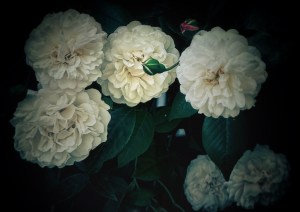
In the picture below, I put shadow and vignette at 100% and then repeated it a few times. I like this effect because it reminds me of an early modern Dutch painting.
In the next picture, I removed the colour and increased sharpness and structure. I like how it brings out the solidity of the structures.
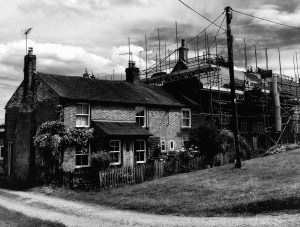
The disadvantage of playing around like this is that it can make photographs look gimmicky. I don’t do it as much as I used to.
Fun with photo communities
I opened an Instagram account and started posting my photos. I was amazed when it began picking up 10 to 20 followers a day. They were nearly all photography accounts. Smartphone photography is a globally popular hobby.
As a copyeditor, I’m used to looking at writing and getting a sense of the human feelings behind the words. Sometimes, I can see where the writer was excited, impassioned, moved, indignant, in a hurry, or bored.
I’ve learnt that smartphone photos by beginners also communicate human feeling, particularly the more abstract pictures. You can feel where a photographer has been aesthetically caught up by a line, a shape, a contrast, or a texture. Even where photos have been edited too heavily, you can see what drew the photographer in.
I recognise this because I do it myself. I can relate to the excitement of capturing a perfect corner or a beautiful curve.
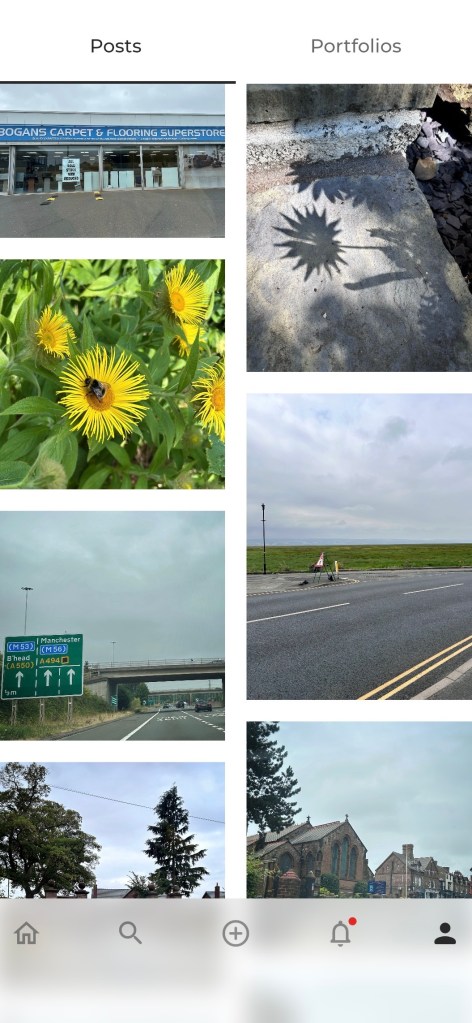
After about six weeks, I moved from Instagram to a much quieter photography app. I was becoming too conscious of the follows and likes, and it was getting in the way of taking pictures. On the new app, the main thing is the photos.
What I’m doing next
Recently, I walked through a small flock of black-headed gulls. They were targeting tourists for food on the riverfront at Parkgate, not far from Liverpool. As they flew around and above me, I raised my phone to the sky and took some quick snaps.
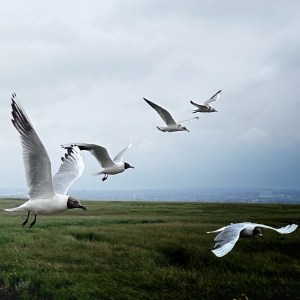
Most of the photos were unusable because there were tourists in them, but I got a few. Like the one above. So far, I think it’s one of my favourite photography moments.
You might note that the colours are quite muted and a little dreary. I’m finding that’s an issue with a lot of my photographs these days, so it’s the main thing I need to work on next. I also want to get better at taking quick snapshots of fleeting moments without catching people’s faces or car number plates. The more often I do it, the more it will become a natural habit.
 TIDE and CANUTE