A visit to Stori Brymbo

I went to Stori Brymbo, Wrexham, to see a 300-million-year-old fossil forest. The fossils are just one part of this heritage attraction, which is on the site of an old steelworks.

When looking around, I joked, “There’s something for everyone at Stori Brymbo.” It’s not entirely true. But if you’re interested in nature walks, industrial history, post-industrial communities, coal, fossils, or photography, you’ll be glad you visited.

The site isn’t fully wheelchair accessible. However, I saw online that Stori Brymbo can offer support for people who are able to ride in a 4×4 vehicle. You’ll need to contact them ahead of time to talk about arrangements.

I enjoyed photographing the ruins and looking at the wide variety of ferns. I also came away with a better appreciation of the relationship between industrial employers and small communities.

The site was an ironworks and then steelworks, in operation from 1796 to 1990. This means it was a multi-generational local employer. I can only imagine the emotional attachment I’d feel to a place that employed my parents, grandparents, and great-grandparents.

Here are a few of the photos I took.
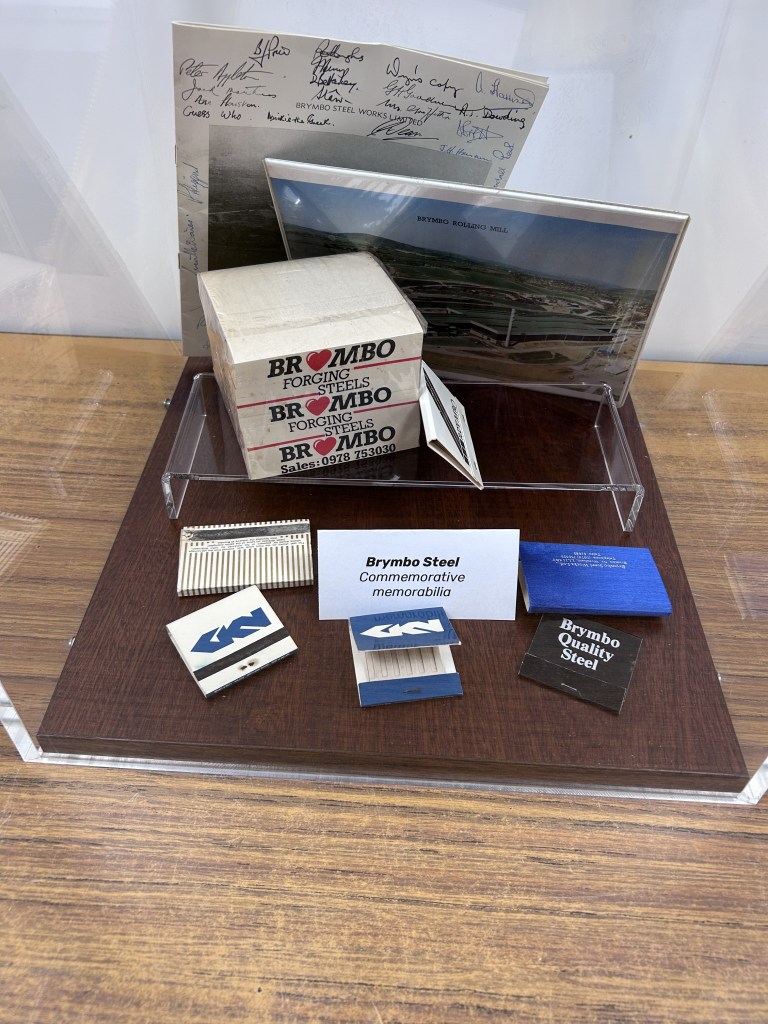
Matchbooks, a block of paper, a brochure covered with signatures, and a photograph wrapped in plastic.
A display of Brymbo steelworks souvenirs; it was common for companies to produce items like these for their employees and customers in the second half of the 20th century.
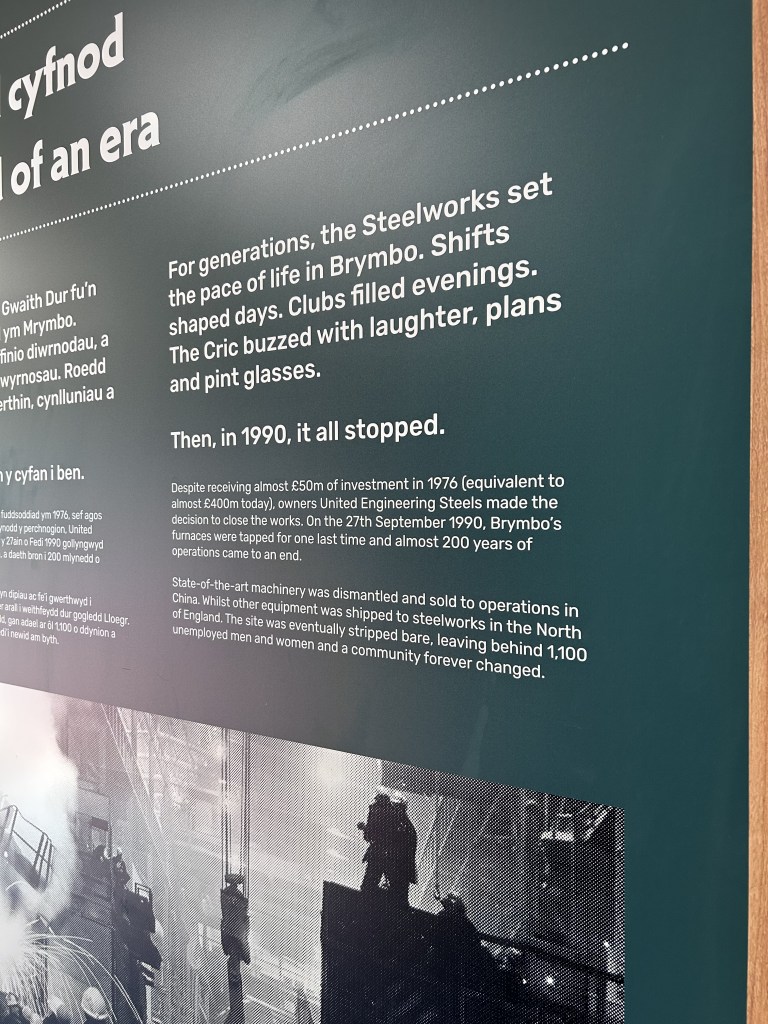
Museum display board. Text reads: "Then, in 1990, it all stopped. Despite receiving almost £50m of investment in 1976 (equivalent to almost £400m today), owners United Engineering Steels made the decision to close the works. On the 27th September 1990, Brymbo's furnaces were tapped for one last time and almost 200 years of operations came to an end."
Brymbo is in Wales, so the museum display boards are in Welsh and English. This is from a part of the exhibition that focuses on 20th-century workers at Brymbo Steelworks.
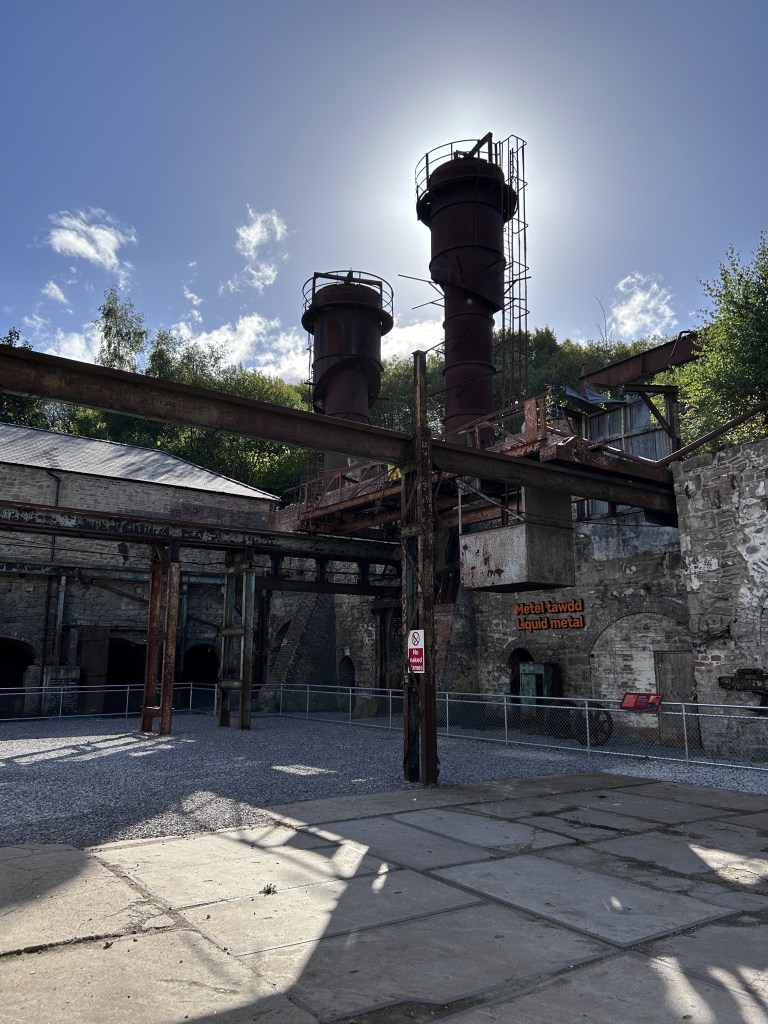
Two metal towers with the Sun behind them. High walls but no roof. The area looks like an open courtyard.
The two tall furnaces in the background were added in the 1970s. There used to be a roof above where I was standing.
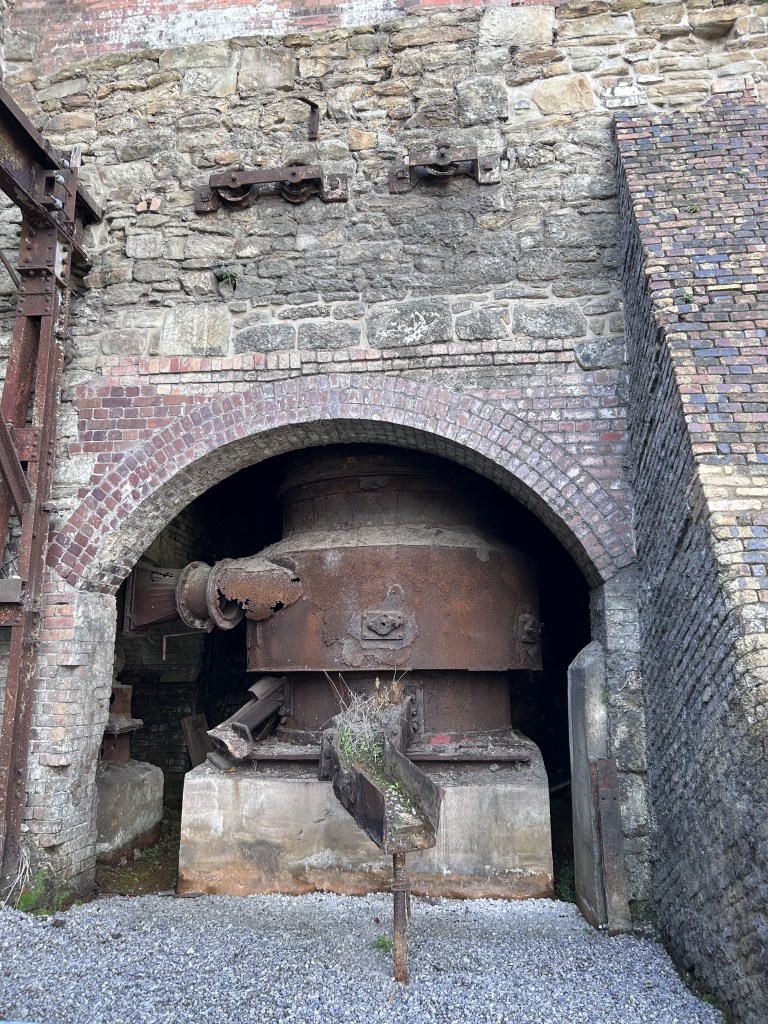
The remains of a metal machine set into the wall. An arch of old brickwork and a buttress of brick.
There are lots of industrial remains to photograph at Stori Brymbo.
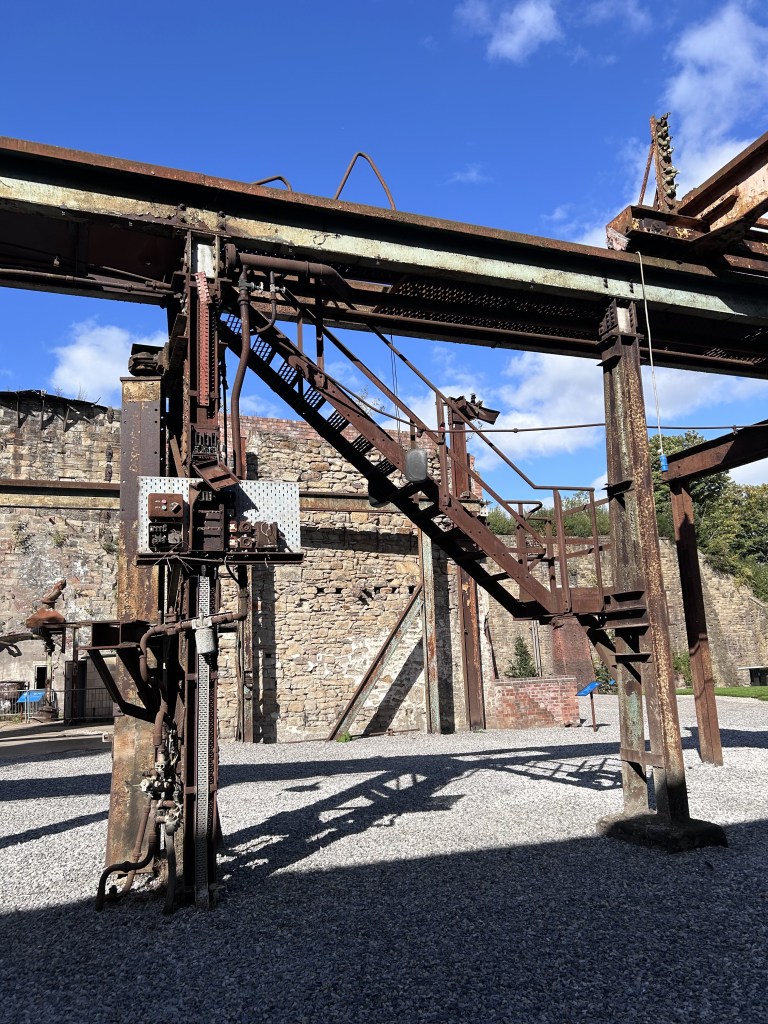
Metal frames, including a staircase. Once part of the steelwork's interior. Now these structures stand out in the open.
Remains of the old steelworks at Stori Brymbo
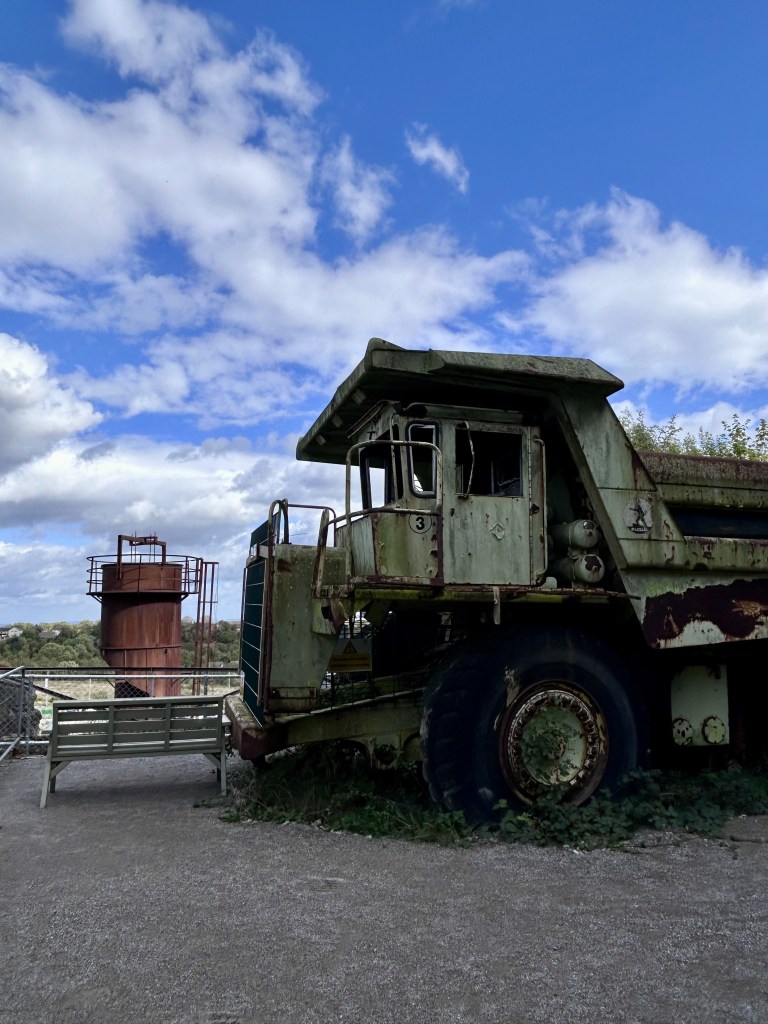
A very big green vehicle with patches of rust and vegetation growing around it.
This vehicle was used in the reclamation of the site.
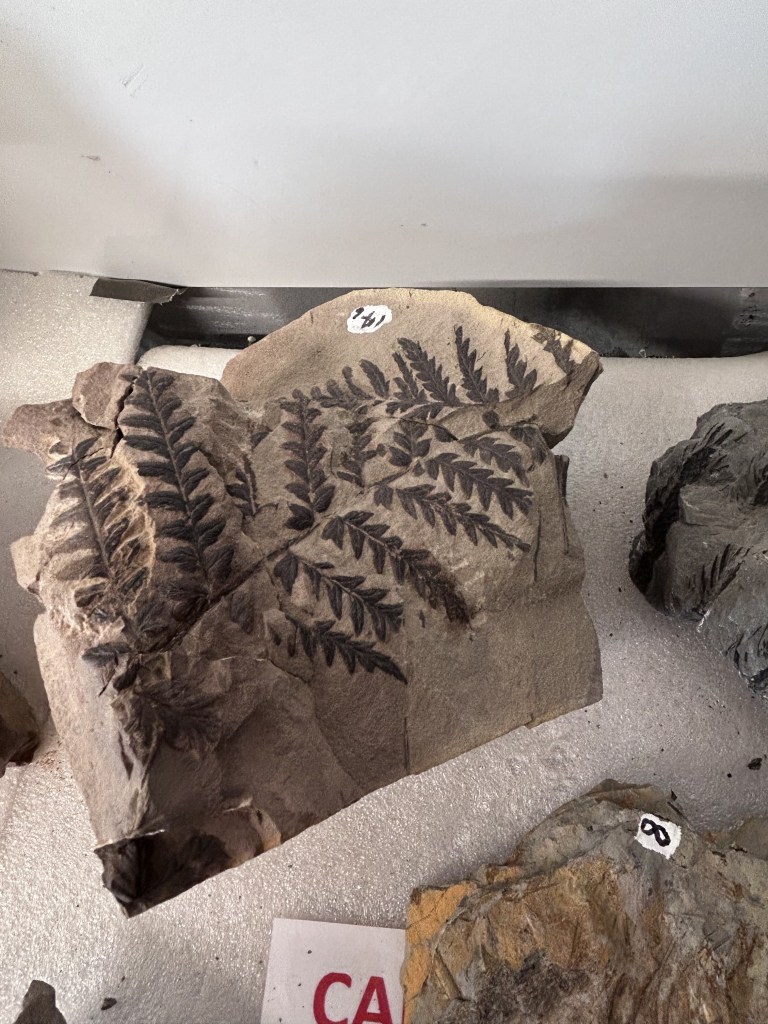
A fossilised fern frond
Some of the fossils found at Brymbo Fossil Forest
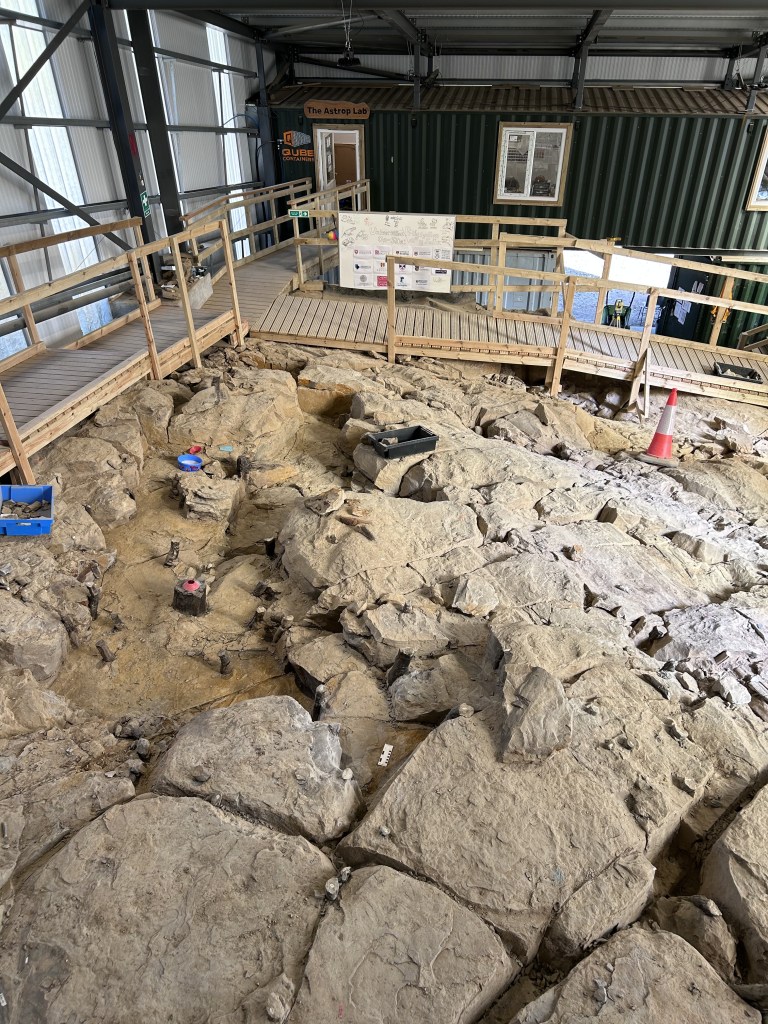
Exposed bedrock inside a building. Small tree trunks poke up from the ground.
This is the fossil forest itself. I didn’t go on the guided tour offered by Stori Brymbo, but rather wished I had. Sites like these need experts to bring them alive. However, I did enjoy my visit and I found some interesting videos about Brymbo Fossil Forest on YouTube afterwards. The video below introduces a medieval mineshaft packed with fossils.

At the end of my visit, I bought a small piece of the fossil forest from Stori Brymbo’s shop. It’s 314 million years old, which is an inconceivable length of time. I’m boggled just thinking about it!

Leave a comment